

Pilonidal cyst disease, often referred to as pilonidal disease, is a condition affecting the skin. Usually, it can be found in the crease that is located between the buttocks. People who sit a lot and have thick body hair have an increased risk of getting it.
Every year, over 70,000 people in the United States deal with this tough situation. A little pocket can form inside a pilonidal cyst, which can collect hair, skin debris, and even pus on occasion.
The American Society of Colon and Rectal Surgeons says it is important to diagnose and treat this condition quickly. Doing so can help prevent lasting pain or other complications.
Key Highlights
- A medical condition known as a pilonidal cyst manifests itself in the buttocks fold. It often causes swelling, redness, and pain.
- Experts think that ingrown hair and friction are the main causes. This can lead to a skin infection.
- Some risk factors are sitting for long periods, having a family history of this problem, being overweight, and having coarse body hair. This condition usually affects people aged 20 to 35.
- The treatments might range from non-invasive to surgical. This depends on how serious the cyst is.
- Finding and taking care of a pilonidal cyst early is really important. This helps to avoid complications like sinus cavities or other infections.
- Medical professionals like Dr. Valeria Simone, MD, at Southlake General Surgery in Texas, provide top-notch medical care. She gives customized solutions to help ensure a good recovery.
Understanding Pilonidal Cyst Disease
Pilonidal cyst disease occurs close to the tailbone. These cysts might appear small, but if they are not treated, they can lead to significant pain and discomfort.
Cysts can show up because of ingrown hairs or skin irritation. This irritation often happens due to friction or sitting still for too long.
Anyone can develop a cyst, but young males who do not move around much are more likely to get one. Understanding the signs and potential risks is essential. This helps with better management and treatment.
What is a Pilonidal Cyst?
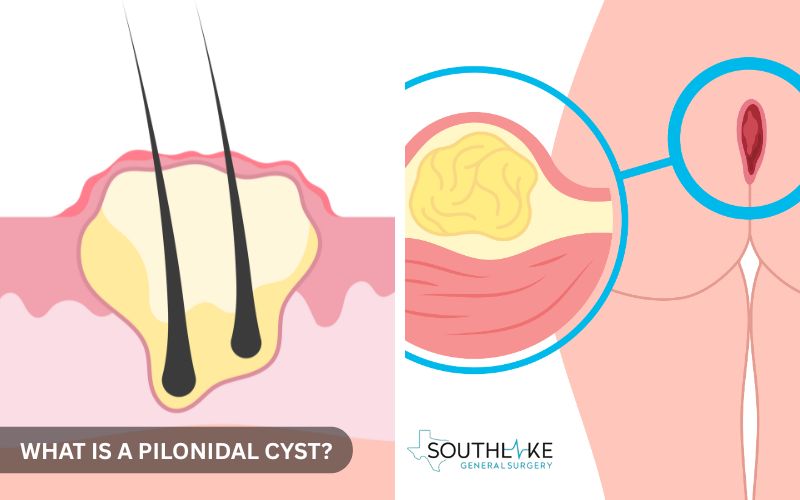
A pilonidal cyst generally refers to a small pocket that shows up in the crease of the buttocks, close to the tailbone. It frequently starts as a minor indentation or bump. As time passes, it can turn into a swollen and painful abscess due to a skin infection. These cysts tend to trap loose hair and other debris, which may cause irritation.
If you don’t take care of this condition, it might end up getting worse. This is especially likely if you sit or do things that cause friction on the skin. Pilonidal cysts might leak pus or blood. They can smell bad. This could mean there is a serious infection that needs attention.
Pilonidal cysts tend to show up mostly in men aged 20 to 35, but actually, anyone can end up with one. Pay attention to initial indicators such as redness and swelling. If you notice these signs, it’s a good idea to get some medical help.
This condition can start with mild discomfort, but it might get worse. It might cause some issues, like sinus cavities or getting infections again and again.
Common Risk Factors and Causes

Knowing the causes of pilonidal cysts can help us find ways to stop and treat them. These cysts might happen from irritation due to friction, sitting for a long time, or family traits like having thick body hair.
The following are the Common Causes:
- Family history: Genetics matter, especially for those with coarse or rough body hair.
- Jeep disease: Over the course of World War II, troops frequently experienced the formation of cysts as a consequence of the bumpy journeys that they endured in their vehicles.
- Long periods of time spent sitting: Truck drivers and office workers face a higher risk of getting cysts because of constant pressure.
- Tight clothing: Wearing snug clothes creates friction that bothers the skin.
Obesity and some workplaces can increase the chances of getting cysts. Pilonidal cysts often start when hair breaks through the skin or from infections caused by ingrown hairs. This shows how important it is to keep good personal hygiene and take steps to prevent these issues.
Symptoms and Causes of Pilonidal Cyst Disease
Many different symptoms might be present with a pilonidal cyst in the tailbone. Many people feel swelling and see redness. They may discover an uncomfortable mass in the upper region of their buttocks. If the cyst gets infected, it may leak pus that smells bad or even blood. You might feel a fever and tiredness as well.
This condition often occurs due to ingrown hair and irritation from pressure, friction, or sitting too long. If you do not treat it, it can worsen and may lead to sinus cavities. Recognizing these symptoms can help you get medical support quickly.
What causes a pilonidal cyst?
Pilonidal cysts usually form when hair follicles and loose hair get stuck in the skin. This might make you feel uncomfortable and could even lead to an infection. Friction and pressure can make these issues worse. This is particularly common for people who sit a lot or wear tight clothes.
- Formation: Cysts typically begin as tiny pits or dimples. They can get bigger and become lumps.
- Complications: The development of abscesses or sinus cavities is an undesirable consequence of cysts that are not treated. This can make the infection worse.
- Historical Context: In World War II, there were records about “jeep disease.” Soldiers developed cysts from irritation caused by repeated friction.
- Prevention: It’s super important to take care of your body. Cleaning and shaving regularly can stop loose hair from getting stuck in the skin. This helps reduce issues like returning pilonidal cysts.
Identifying the Signs and Symptoms

To find out fast if someone has a pilonidal cyst, look for signs of infection. These signs can include:
- Redness
- Swelling
- Tenderness in the crease of the buttocks
Some cases start as a small lump or a dimple. But they can grow into abscesses, which can leak pus or blood.
Sitting too much may make the pain feel worse. Also, severe infections can cause:
- Nausea
- Fever
- General tiredness
If you see swelling and have bad-smelling drainage, you need to see a doctor right away.
Keeping an eye on the area is key for spotting problems early. Pilonidal cyst symptoms might vary from one individual to the next. You should not ignore them. If you see the warning signs, you can take action to stop more serious issues or complications.
When to Seek Medical Attention
Waiting to treat an infected pilonidal cyst can be risky. Here are some signs of infection:
- Ongoing swelling or pus drainage
- Fever
- Pain
These signs mean you need to see your primary care provider right away.
If things become worse, it can lead to problems such as:
- Infections that impact the whole body
- Sinus cavities that form under the skin
If you feel a small lump or dimple that hurts more when you sit or feels tender, you should book an appointment right away.
Don’t wait to feel worse. If you have an infected pilonidal cyst, it could cause bigger issues and become harder to treat later. Getting help quickly is important. It can help you get the right treatment and lower the chance of the infection spreading. This can also make you feel better overall.
Diagnosis of Pilonidal Cyst Disease
When doctors find pilonidal cyst disease, they start by checking the area for obvious signs. This can include abscesses or dimples. They also ask about symptoms, such as any drainage or changes in pain.
In some cases, tests like MRI or CT scans may be necessary to check for sinus cavities under the skin. This helps confirm the diagnosis. Finding problems early is important. It allows for the right treatment, helps avoid complications, and leads to a quicker recovery.
Professional Diagnosis Techniques
Healthcare providers can easily check if someone has a pilonidal cyst. Physical examination of the buttocks crease typically reveals obvious symptoms. Some symptoms can be abscesses or dimpling of the skin.
In tougher or repeated cases, doctors may use tools like MRI or CT scans to find hidden sinus cavities. These tests help make sure that treatment takes care of all possible issues.
Diagnosis Techniques:
- Physical examination: This looks for signs you can see, like redness or swelling.
- MRI: This helps to find deeper sinus cavities under the skin.
- Incision and drainage: This checks for an abscess and can provide relief.
Doctors can create better treatment plans for pilonidal cysts. They do this by doing simple physical exams and using modern imaging tools.
What to Expect During Your Consultation
Your visit for pilonidal cyst disease will start with the doctor asking about your symptoms and how you spend your days. They will want to know if you sit for a long time or do activities that cause friction. The physician will assess the cyst’s classification, dimensions, and examine for any indications of infection.
During small exams or procedures, you will feel local anesthesia to numb the area. The physician will examine for extensive sinus cavities or minor cysts. This will help them pick the best treatment.
The doctor will discuss all your choices with you. These options may include laser treatment or surgery. You will see that this is the most suitable plan for you.
You can ask any questions during your visit. These questions can be about how to care for your wound and what to do next.
Treatment Options Offered by Dr. Simone

Dr. Simone gives several treatment choices for pilonidal cyst disease. Patients can go for less invasive techniques like laser therapy and fibrin glue. These treatments can help them recover quickly and reduce the chance of complications compared to regular surgery.
It is possible that a cyst will require surgical removal if it is infected. This involves draining pus and using local anesthesia. Patients need to know about this procedure while considering their treatment options.
Minimally Invasive Procedures
Minimally invasive procedures are a gentler way to treat pilonidal cyst disease. Patients can heal faster and feel less pain. Treatments like laser therapy and fibrin glue can work well for small cysts without making big cuts.
Doctors usually use local anesthesia to keep the process comfortable for patients. These new methods lower the chances of complications like infection or irritation. That’s why many people with symptoms of a pilonidal cyst prefer these treatments.
Surgical Excision: What You Need to Know
Surgical excision is a good treatment for pilonidal cyst disease. It works well for people who have symptoms that keep coming back. This simple procedure takes out the entire cyst and any sinus cavities connected to it. It generally involves using local anesthesia to help minimize any pain.
After the surgery, taking care is very important. Infection symptoms, such as redness or swelling, should be closely monitored by patients. Good hygiene and taking antibiotics if needed can help lower the chance of complications.
Aftercare and Recovery
Proper aftercare is very important for healing from a pilonidal cyst. You should keep the area clean and dry. This will help prevent infections. Consistently monitor for signs of an infection, including redness, swelling, or discharge.
Follow your doctor’s advice on managing pain, which might include taking antibiotics. Using gauze or a bandage can facilitate the healing process. Adhering to your primary care provider’s guidance can help reduce complications and expedite your return to everyday activities.
Post-Procedure Care Guidelines
After a minor surgery for pilonidal cyst disease, it is very important to take care of yourself to heal well. Here are some key tips to follow:
- Keep the area clean and dry: Wash it every day with mild soap. This lowers the chance of skin infections.
- Change dressings carefully: Clean the area gently first. Then, apply a new gauze bandage.
- Monitor for signs of infection: Watch for symptoms like swelling, redness, or pus.
- Maintain good hygiene: Staying clean helps prevent complications.
- Avoid friction: It’s important to reduce friction in the area while you recover.
Tips for Speedy and Smooth Recovery
- Keeping good hygiene is very important after treatment for a pilonidal cyst.
- Cleaning the area with mild soap regularly can help stop infections.
- Infections often happen after this treatment. A clean bandage can protect the area from irritation caused by friction from your clothes.
- It is essential to adhere to the recommendations made by your healthcare provider.
- Drinking enough water and eating a balanced diet will help you recover.
- Getting a lot of rest can also make you feel better.
This can lower the chances of the cyst coming back and keep you comfortable in the future.
Conclusion
To manage pilonidal cyst disease, it’s important to know its symptoms and treatment options. Good hygiene is key. It can help lower the chances of problems like infection. Consulting with a primary care provider or a specialist can assist you in discovering the most effective treatment options.
This may mean choosing a less invasive method or surgery to remove the cyst. Recovery and aftercare are significant too. They help reduce the risk of the cyst coming back and can improve your quality of life.
Make an Appointment
Dr. Valeria Simone, MD, at Southlake General Surgery in Texas, is focused on fully treating pilonidal cyst disease. Knowing about this condition is very important for receiving good care and long-term relief.
For scheduling an appointment, please reach out by calling +1 (817) 748-0200. During your visit, feel free to talk about your symptoms and treatment choices. Dr. Simone and her team are ready to provide care that fits your needs. They will actively help you manage this often-painful condition.
Frequently Asked Questions
Can a Pilonidal Cyst Recur After Treatment?
Yes, a pilonidal cyst can come back even after treatment. If you don’t stay clean, have a lot of hair, or don’t follow care tips after the procedure, it can return. It’s really important to listen to your doctor’s advice after treatment. This helps lower the chances of getting another cyst.
How Can I Prevent Pilonidal Cysts in the Future?
To stop pilonidal cysts, practice good hygiene. Stay clean and dry. Avoid sitting in one position for an extended period. Keeping your weight under control and exercising regularly can help lower your risk. It’s also a good idea to wear loose-fitting clothes to reduce friction. Finally, have regular check-ups with your healthcare provider.
Are There Any Home Remedies for Pilonidal Cysts?
Home remedies can ease the pain from pilonidal cysts, but they are not a substitute for medical care. You might feel better by using warm compresses, taking over-the-counter pain relievers, and keeping good hygiene. Still, it’s a smart choice to see Dr. Simone for better long-term solutions.
Who can get a pilonidal cyst?
Pilonidal cysts can happen to anyone, but they are more common in young adults, especially men. Some things can increase the chance of getting these cysts. These include sitting for a long time, being overweight, and having a family history of this problem. Knowing about these risk factors can help spot people who may be more likely to get pilonidal cysts.
Medically Reviewed By: Dr. Valeria Simone MD
Board-certified General Surgeon at Southlake General Surgery, Texas, USA.
Follow us on Facebook and YouTube.
References:
- Pilonidal Disease | ASCRS. (n.d.). https://fascrs.org/patients/diseases-and-conditions/a-z/pilonidal-disease
- Ansari, P. (2025, January 10). Pilonidal disease. Merck Manual Professional Edition. https://www.merckmanuals.com/professional/gastrointestinal-disorders/anorectal-disorders/pilonidal-disease?query=pilonidal%20disease
- Nixon AT, Garza RF. Pilonidal Cyst and Sinus. [Updated 2023 Aug 8]. In: StatPearls [Internet]. Treasure Island (FL): StatPearls Publishing; 2025 Jan-. Available from: https://www.ncbi.nlm.nih.gov/books/NBK557770/
- Website, N. (2025c, June 2). Pilonidal sinus. nhs.uk. https://www.nhs.uk/conditions/pilonidal-sinus/
- Surgery for pilonidal cyst: MedlinePlus Medical Encyclopedia. (n.d.). https://medlineplus.gov/ency/article/007591.htm